Neck Lump: Understand the Investigation Before Choosing Treatment
A neck lump can arise from different tissues and does not establish a diagnosis by appearance or feel alone. The next useful step is to identify the finding, consider its history and decide which investigation is needed. An operation should follow that explanation rather than be the starting assumption.
ENT Surgeons Melbourne helps you prepare for a structured assessment. Record the duration, whether it is growing and any associated symptoms. Bring your referral and earlier reports so the discussion can connect the clinical finding with the evidence already available.
Prepare a neck assessment enquiry · Read about head and neck surgery

Consider the next step.
When should a lump in the neck be assessed?
A lump in the neck should be assessed when it is unexplained, persists or changes. Arrange medical review even if it is painless. In adults, a finding that remains over several weeks needs attention rather than being watched indefinitely without advice.
Mention difficulty swallowing, a lasting voice change, an oral sore or unexplained weight loss. These features do not confirm a particular diagnosis, but they help the clinician judge urgency and the pathway.
Breathing difficulty, rapidly increasing swelling or inability to swallow saliva needs urgent medical assessment. Do not wait for a routine enquiry response or try to establish the cause at home first.
A neck mass can involve different tissues
A neck mass may involve a lymph node, thyroid, salivary gland or another structure. Its location is a useful part of the examination but cannot establish every cause on its own.
A persistent neck finding needs an explicit next step
A persistent neck finding should have a next step even if an initial test is reassuring or unclear. Ask whether observation is appropriate, when review is due and what change should lead to an earlier assessment.
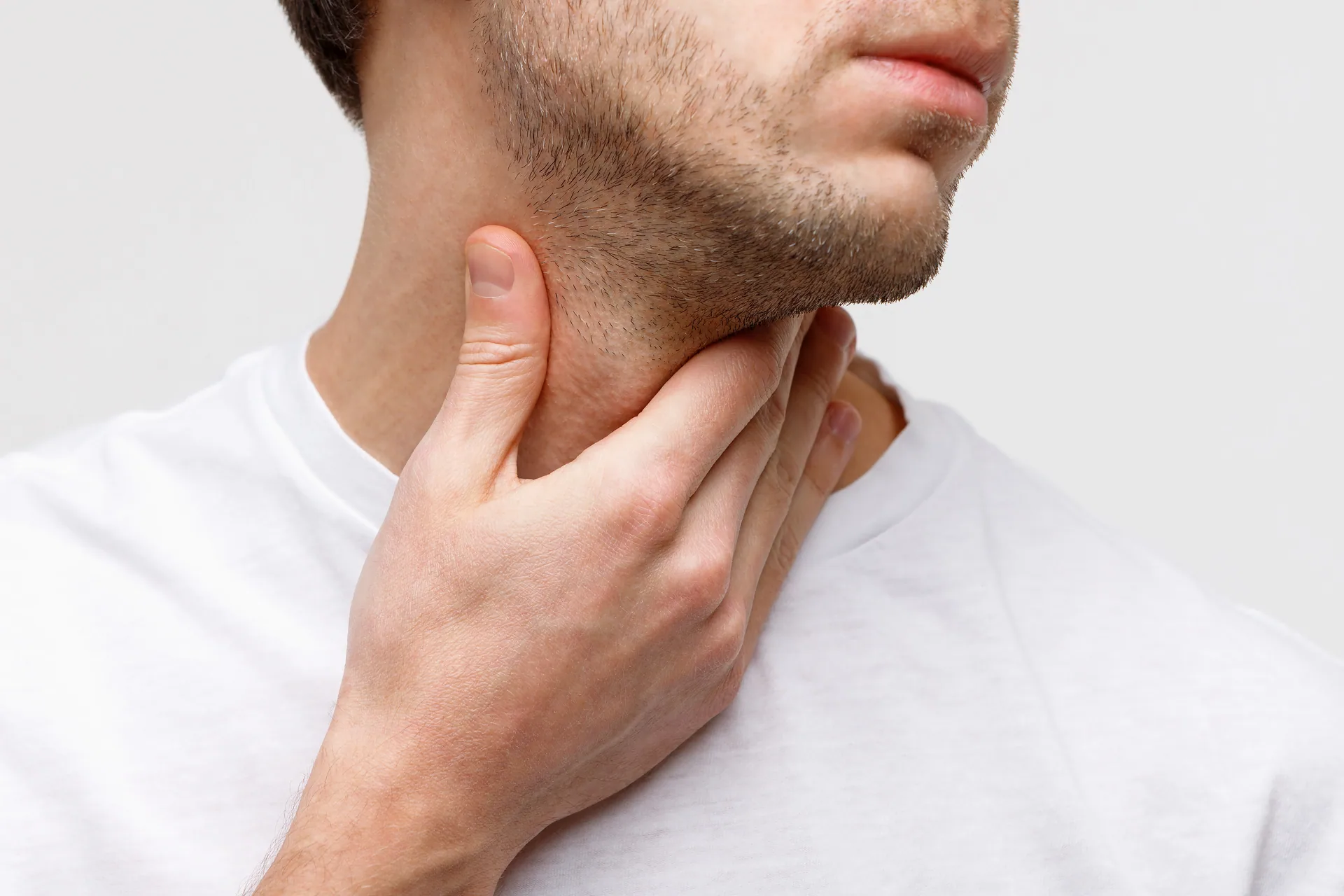
Unexplained neck swelling: bring the pattern and relevant history
Unexplained neck swelling is easier to investigate with a timeline. Describe onset, growth, pain and whether it changes with illness or meals. Mention earlier similar findings and any relevant medical treatment.
Tell the clinician about infection, dental concerns, earlier skin or other cancers and previous neck procedures. Bring medicines and important allergies too. A history helps direct tests rather than make the diagnosis from one feature.
Children need an age-appropriate assessment. Use paediatric ENT information when preparing a child’s visit, and seek medical advice promptly if the child is acutely unwell or the swelling is changing quickly.

Clinical examination: identify what needs investigation
Clinical examination considers the finding and relevant nearby areas, including the mouth, throat or glands where appropriate. A camera examination through the nose may be discussed if it would help assess a related question.
Ask what the examination suggests and what cannot yet be concluded. A working explanation should be distinguished from a confirmed tissue diagnosis. If another test is recommended, understand which uncertainty it addresses.
Read nasendoscopy information if a camera test is proposed. Different examinations answer different questions, so one reassuring view should not be assumed to replace every other investigation.
Diagnostic imaging: understand the purpose of the scan
Diagnostic imaging may use ultrasound or another method according to the finding and clinical question. Imaging can help locate and characterise a change, but may not provide a definite tissue diagnosis by itself.
Bring existing reports and access details for images. Ask before arranging repeat scans independently. The clinician can advise whether an earlier study answers the current question or whether another investigation adds something important.
If the finding involves the gland at the front of the neck, thyroid nodule information explains that assessment pathway. A gland near the ear raises different questions, covered in salivary gland surgery information.
Tissue sampling: ask what the report can establish
Tissue sampling may be recommended to obtain cells or tissue for pathology assessment. The method depends on the finding and question, and may include a needle procedure. Ask what is proposed, how to prepare and where it will happen.
A sample can be insufficient or indeterminate. That does not automatically settle the diagnosis in either direction. Ask which further step would be appropriate if the report is not conclusive.
Head and Neck Cancer Australia’s patient information explains why persistent nodes in adults can need investigation. This is a reason to obtain assessment, not a diagnosis of every neck swelling.
Tell the team about medicines affecting bleeding before a sampling procedure. Do not stop prescribed medicines without individual advice from the clinician responsible for care.
Results review: close the loop before deciding on treatment
Results review should relate the report to the examination and symptoms. Ask what is established, what remains uncertain and whether the next step is observation, another investigation or a treatment discussion.
Confirm who arranges and explains the result, and what to do if the expected appointment or update does not arrive. Keep copies together. A completed scan or biopsy is not a complete pathway until its meaning and next action are clear.
If a procedure is recommended, ask its purpose and alternatives. Request cost information for consultations, tests and any operation separately. Fees and Medicare information helps organise those questions without assuming one estimate covers the whole pathway.
Questions about a persistent neck finding
Does a lump in the neck always mean cancer?+
A lump in the neck does not always mean cancer. Different conditions can cause a finding, and assessment is needed to establish the cause. Persistence or change should not be dismissed because there is no pain.
Does a neck mass always need removal?+
A neck mass does not always need removal. The diagnosis and findings guide whether observation, further investigation or treatment is appropriate. An operation should have a specific explained purpose.
Can unexplained neck swelling be watched without any appointment?+
Unexplained neck swelling should have a medical assessment rather than indefinite self-observation. A clinician can advise whether watching is reasonable, what to monitor and when review is needed.
Will clinical examination alone establish the diagnosis?+
Clinical examination may suggest the next investigation without establishing every diagnosis. Ask what can be concluded from the examination and why imaging or sampling is being considered.
Can diagnostic imaging replace a tissue report?+
Diagnostic imaging and a tissue report answer related but different questions. Some findings need sampling to clarify their nature. The appropriate combination depends on the suspected cause.
What if tissue sampling does not give a definite answer?+
Tissue sampling that is inconclusive needs an explained next step. That may involve another sample, a different investigation or a procedure, depending on the findings and clinical concern.
Who should arrange results review?+
Results review responsibility should be clear when tests are ordered. Confirm which clinician will explain the report and whom to contact if the planned communication does not occur.
Should a new swallowing or voice symptom be reported?+
New swallowing or voice symptoms should be reported when seeking assessment or while waiting. They may affect the appropriate urgency and investigation pathway. Acute breathing or swallowing emergencies require urgent care.
Prepare for your neck mass assessment
Neck mass assessment should connect the history, examination and reports with a clear next action. Bring the available information and ask who will coordinate the result and decision that follows.
Start with a conversation.
Send a non-urgent enquiry about arranging a visit. Keep detailed health information and medical records for your consultation.
- 01
Tell us what brings you here
Choose an area of care and leave your contact details.
- 02
Confirm the practical details
Check the location, appointment fee and referral requirements with the practice.
- 03
Prepare for your consultation
Bring relevant reports, medicines and the questions you want to ask.